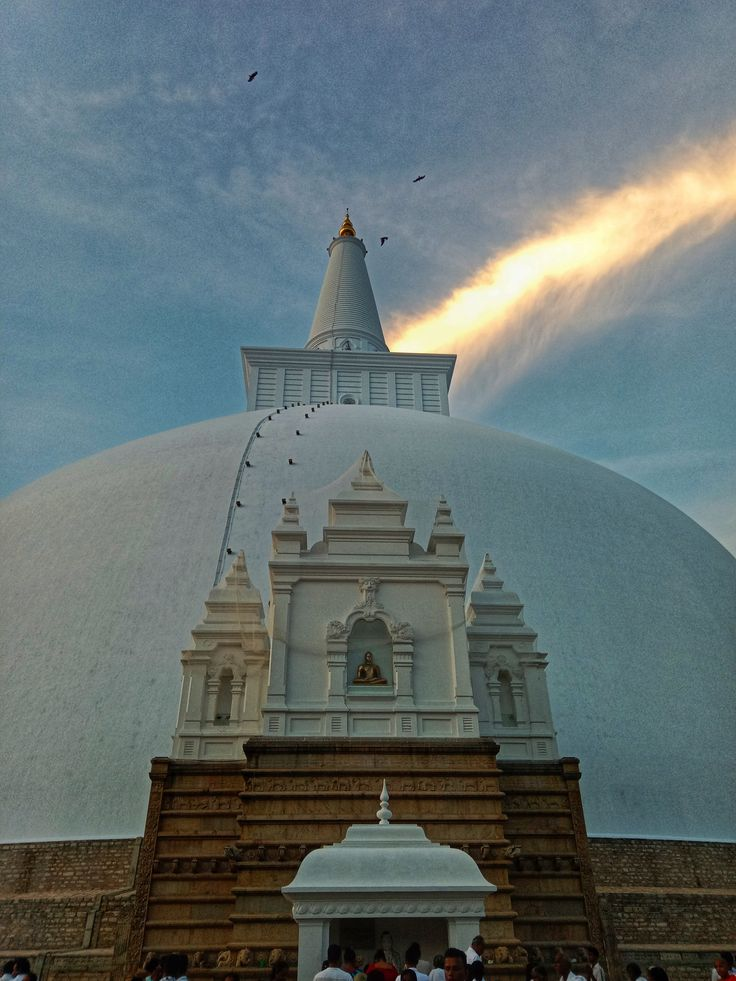


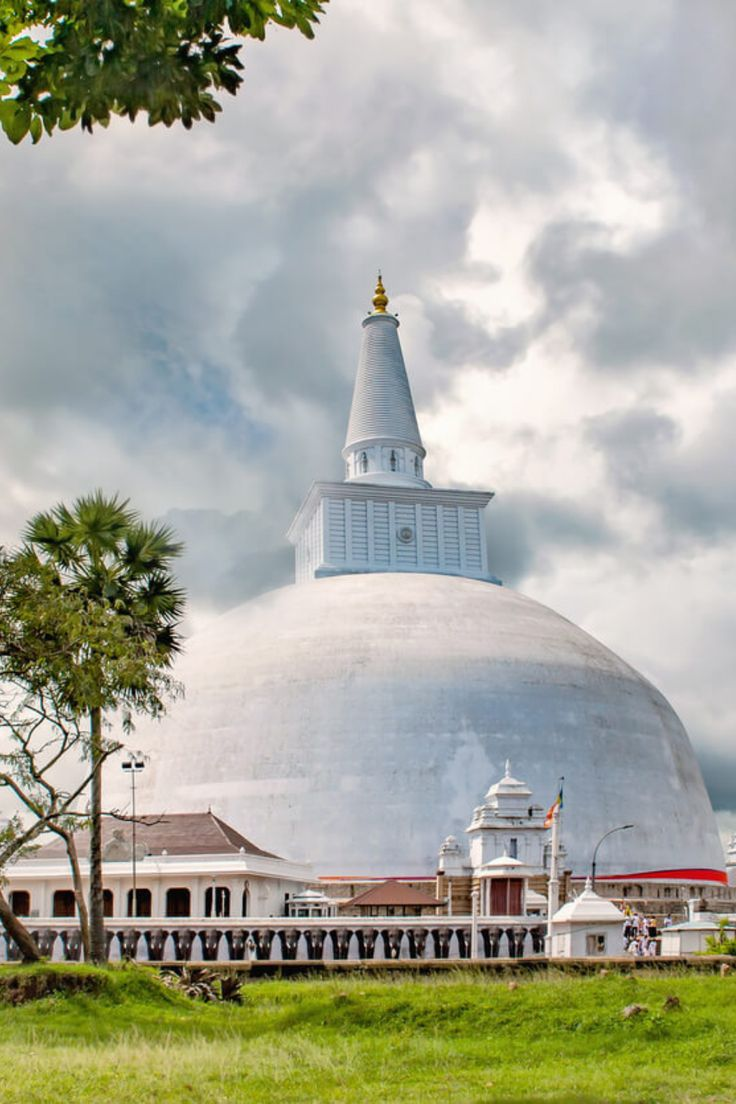
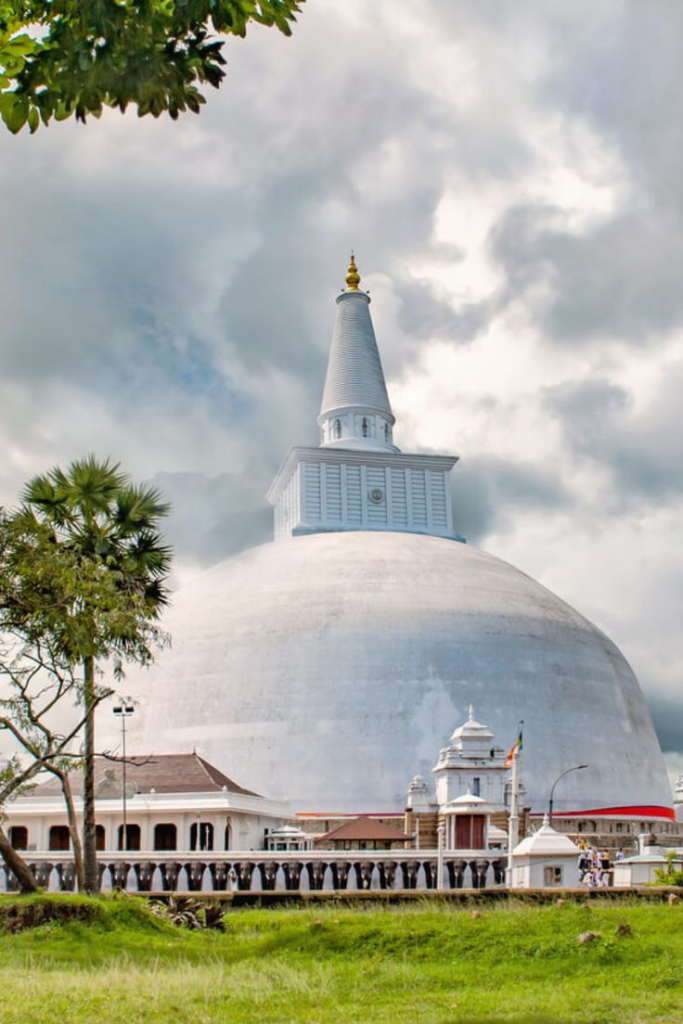
The Maha Thupa or Great Stupa, Ruwanweliseya, is one of the most religious monuments among Buddhists in Sri Lanka because it towers high in Anuradhapura. This is a bubble-shaped stupa, erected by King Dutugemunu in 140 BC and it houses the largest repository of the relics of Buddha in the world, which attracted pilgrims and scholars to a bright white dome. Its continuing existence is the symbol of antique engineering prowess, and the uncompromising Theravada faith over centuries of challenges.
Construction Legacy
The construction of Ruwanweliseya was initiated by King Dutugemunu when he triumphed over the invasion of Chola named Elara to bring the kingdom of Rajarata into one and as a promise to venerate Buddhism after a divine dream. The Mahavamsa records miraculous material manifestations, bricks brought on the island, clay brought to sacred places, a labor force of thousands, one of whom, architect Indagutta, devised its stability in case of earthquakes. Its initial height was 55 meters and its circumference was 290 meters, but its construction was not completed in one year, and Dutugemunu was sick when he wanted it to be finished; his brother Saddhatissa had it wrapped in white cloth, in order that the king might die thinking it complete.
Enshrinement rituals were as supernatural as those of the Nagas in Ramagrama: the relics of the Nagas flew into a seated Buddha image, the goddesses like Indra and Brahma guarded the relics, arhats recited Suttas, all could not have been more cosmic. The room is sealed with stone slabs 40 meters and guarded by powers of the arhats, which includes never-withering flowers and never-fading lamps, to ensure the room is not disturbed since the time of deathbed of Buddha which fulfills oracles. It was later renovated by subsequent kings such as Parakramabahu I (1153-1186 AD) using Tamil labor which was captured and later destroyed by the invasions by Kalinga Magha.
Architectural Brilliance
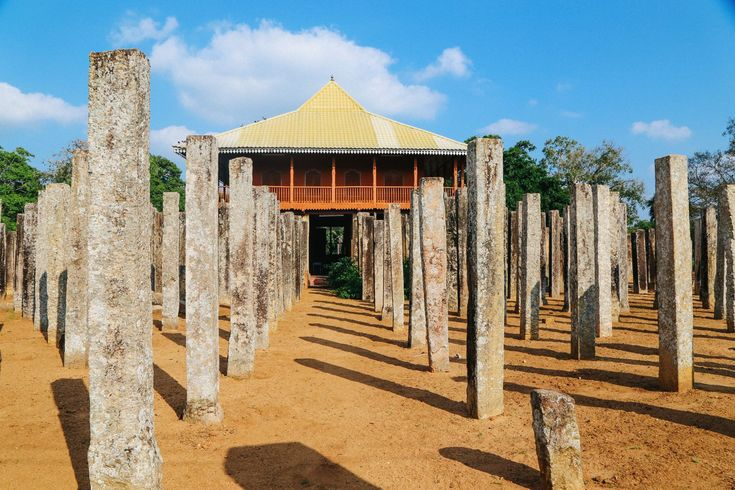
Ruwanweliseya is a good example of the bubbulakara (bubble-like) type of stupa, whose dome is now 103 meters in height following restorations, and is found on a base of granite with butter-clay layers, bricks, or iron mesh to withstand seismic forces. It has four big vahalkadas (entrances) which are carved with complicated elephants and makaras which support relic terraces initially paved with gold and gems. One of the eth (square) of the harilyaya has a chatra (spire) at its summit, and concentric walls known as Eth Pawura circle processional paths surrounding the eth that are lined with 3,000 stone pillars in certain records.
Engineering wonders consist of earthquake-resistant foundations that lead to the flow of Tissa Wewa water to lime plaster that will survive a monsoon. Its hemispherical perfection contributes to impermanence compared to Jetavanaramaya (third tallest ancient structure), and the hemispherical perfection is surrounded by statues four Buddha images and a Bodhisattva, which were restored by bhikkhu-led fundraisers, and crowned in 1940 and 2019.
Sri Lankan Archaeological Department excavations revealed relic caskets, inscriptions, and tools showing a build up over Roman domes in magnitude, but outstripping them in spiritual purposes.
Sacred Relics and Rituals
Ruwanweliseya contains one dona (two quarts) of Buddha relics, the largest repository of its type in the world, on whose site Ashoka, according to Mahavamsa prophecy, manages to provide the portion of the world he was not able to obtain when he was alive. These also involve cremation ashes that create miracles in the enshrinement process that attract 120 million to become arhatis in the legends. Pilgrims go roundclockwise, bringing gifts of flowers and lamps on Poya days, because they think that they will earn a credit of approaching enlightenment.
Being an Atamasthana (eight sacred sites) and Solosmasthana, it is the base of the UNESCO precinct of Anuradhapura, which is the location of almsgivings and confessions. The gardens of Mahamewna Uyana were the means of royal-monastic connections, and the statue of Dutugemunu reminded of his sanctity. Southeast Asian Buddhists around the globe worship it, in connection with Theravada through Mahinda Thero.
Cultural and National Symbolism.
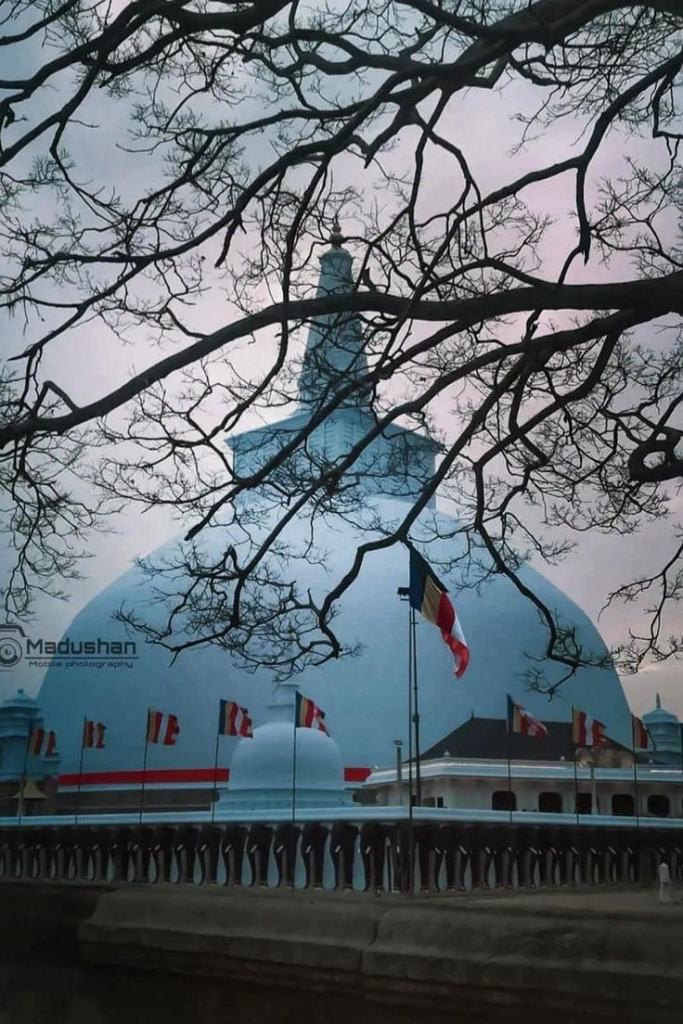
According to Thupavamsa, ruwanweliseya is a symbol of Sinhalese resistance, reconstructed after being sacked by Cholas and associated with the kingship legitimacy. It brought together the society on the basis of castes, where all the donors of all the ranks are eternalized in the inscriptions and this created egalitarianism against feudalism. It is a source of national pride in present-day Sri Lanka, appearing in poetry and festivals, and a symbol of the triumph of dharma over challenge in symbolism.
UNESCO status since 1982 brings into the limelight urban planning genius which influenced Myanmar Kaunghmudaw Pagoda. Its mystique is enhanced by the presence of folklore of watch-over spirits and buried riches, and its socio-anthropological functions of mundane-spiritual reconciliations have been studied.
Preservation Challenges
Plaster is eroded by monsoons, earthquakes and tourism and since 2010, Archaeology officials have conducted laser cleaning and buttressing. Plant intrusion and seismic threat require close observation and eco-tourism excavations have discovered votive plaques. Analogs of climate change boast its flood-proof bottom as a prototype to traditional adaptation.
Restoration arguments between authenticity and 92 meters original height and 103 meters present height include digital scans of subsurface relics non-invasively.