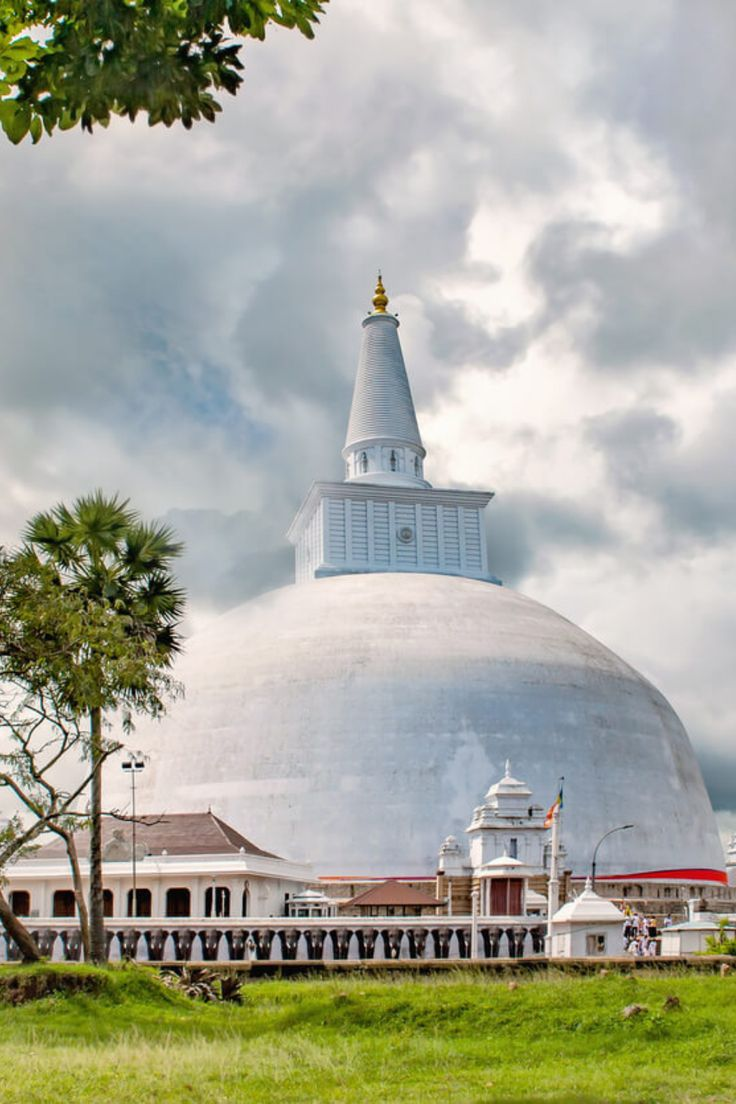


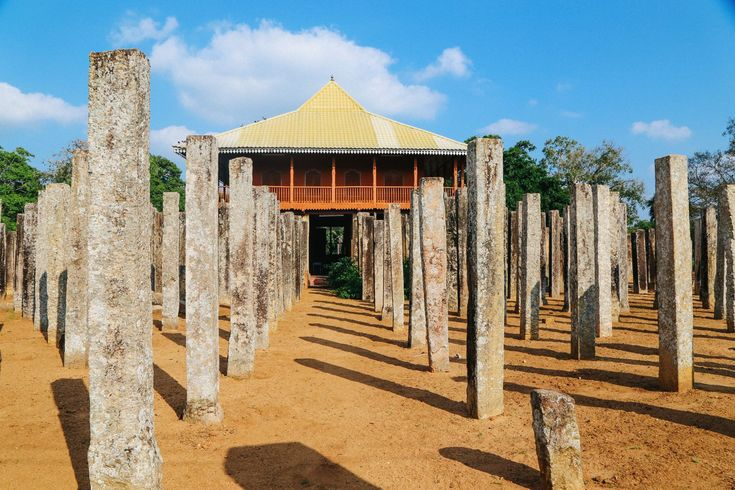
The Brazen Palace as it is commonly referred to as Lowamahapaya is one of the most breathtaking architectural designs of ancient Sri Lanka at Anuradhapura. This immense monastic compound used to reach a height of nine stories as a great chapter house of the Maha Vihara fraternity. Its history of building, demolition, and re-building reflects the strength of the Sinhalese Buddhist society.
Origins and Royal Patronage
It was built, following a celestial blueprint, which revealed its construction in a dream which King Dutugemunu received after uniting the island between 161-137 BC. It was built in the middle of the sacred city of Anuradhapura to replace a previous uposathagara of the time of King Devanampiya Tissa (250-210 BC) and became a multifunctional area used by the monks to eat, hold a Poya day assembly, and conduct confession (Simamalake). The size was 120 meters on each side, and it took six years to construct, which involved thousands of people and decoration of the walls with corals, gems, and elaborate carving that astonished the contemporaries.
The Mahavamsa chronicle narrates its opening with a voluminous detail as Dutugemunu gave lavish presents and made it the tallest secular structure until the 10th century AD, and it can only be surpassed by stupas such as Jetavanaramaya. It was then repaired by later kings, who were motivated by piety: Kanirajanu Tissa gilt its roof in 32-66 AD, and during calamities, it was demolished and restored by King Saddhatissa in the 2nd century BC to provide more space. During the reign of King Vatta Gamani Abhaya (29-17 BC), it also became a symbol of royal religion and was incorporated with several other relics in its vicinity such as Ruwanweliseya to become the spiritual centre of Anuradhapura.
Invasions pushed its survival to the limit: South Indians troops under Elara had earlier spared it, however, Chola incursion in the 10th century and natural calamities felled it so many times. The period of King Mahasana (273-301 AD) was destroyed in 739 AD and Kittisirimevan took a revival with seven stories (301-328 AD). The visible ruins are the ones repaired in the 12 th century, nine times according to the legends, each restoration maintained the Theravada sanctity.
Architectural Ingenuity
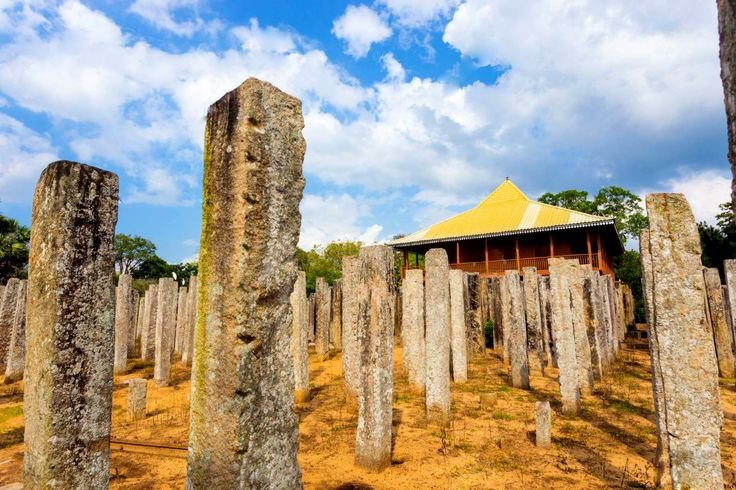
Lovamahapaya or Lohaprasadaya is also named after bronze (loha) plates which covered its roofs to produce a glittering facade of imperial grandeur within a Buddhist monastery. At the ground level there were 1,600 granite pillars in 40 rows of 40, with 8 meters of height, and hewn to fit each other with no mortar, bearing wooden upper stories that would rise to the shape of a peak 9 stories high. This type of hypostyle used in Egyptian halls but raised as multi-storied presented hydraulic lime mortar innovations and foundations that were resistant to earthquakes.
Phased expansions were verified by excavations of British archaeologist H.C.P. Bell in the late 19th century that found bases of pillars, the drainage system, and artifact deposits such as pottery and inscriptions. Now there are 40 pillars in place, which surround a small modern Upsatha dwelling that Maha Vihara monks use to recited Patimokkha on a full moon day. The symmetry of the site was based on the cosmological concepts, pillars that represented the 1,600 precepts of Vinaya, and an element of practicality and rich symbolism together.
Responsible elements such as internal courtyards were used to facilitate ventilation, high platforms to preach and aqueducts to carry water of Kalaveva were an indication of the engineering in the city compared to the Roman aqueducts. Its size was vast compared with that of contemporary buildings (as were the villas of Pompeii), its wooden superstructures, since destroyed by termites and fire, were probably gilded in balustrades and niches that held the stories of Jataka.
Religions and Cultural Influence.
Anuradhapura became the seat of Buddhism worldwide after the introduction of Buddhism by Mahinda Thero in the 3rd century BC and Anuradhapura became the seat of Buddhism, with uposatha ceremonies every two months as the monks reaffirmed their vows. Its vaults preserved religious writings and artifacts and supported academic centers that impacted Southeast Asian Theravada customs. Rebuilding periods of royal authority put emphasis on the legitimacy of kings in terms of monastic patronage and Dutugemunu was the predecessor that gave life to epics such as Mahavamsa.
In cultural terms, it reflected Sinhalese identity under Tamil invasions and its existence was a sign of the victory of dharma. There are inscriptions glorifying donors of every caste and emphasize egalitarian access to the monasticity. To the ancient society it was a nexus of pilgrimage in the octet of Atamasthana, attracting the almsgivers and confessions of the people, strengthening the social unity with their shared practices.
Contemporary Sri Lankans consider it as heritage foundation, and UNESCO-registered since 1982, which teaches about pre-colonial excellence. Folklore is sustained by legends of lost riches under pillars and its lore in verse such as the Sandesa Kavyas brings back memories of lost greatness.
Conservation and Contemporaneity.
The Department of Archaeology in Sri Lanka is in charge of conservation, which involves laser scanning (since 2010) to map the layers under the ground to fight against monsoons and tourism erosion. There are still problems: cracks in the pillars due to the seismic activity and the diggings made by people in the wrong places jeopardize the integrity, but the remnants are stabilized by means of laser cleaning and buttressing. It is integrated into eco-tourism plans and improves local economies as well as investing in digs.
Its precise height is the subject of debate by scholars: chronicles say 9 stories (30 meters), whilst engineering studies indicate 7 maximum because of the strength of wood. The comparative studies of the Vatadage of Polonnaruwa point to the stylistic developments, which inform the discussion of the global heritage on sustainable ancient construction.
To expand on the point, Lovamahapaya displays climate adaptation: the pillar elevations avoided flooding, and it was the same case with the current rising seas in Sri Lanka. It is associated with STEM curriculum.
Visitor Guide and Reflections.
Entry through the sacred area ticket (LKR 7,500 to foreigners and allows one three days of entry), coming out after Ruwanweliseya. Dawn visits feature misty-pillar structures, which are perfect in photography; sound tour lectures contain Mahavamsa text. Ride the 4km holy loop, with interruptions of chants by the monks who are practising Upsatha, a living shrine to antiquity.